
AND Studio Architects at Milan
- comunicazione832
- Apr 29
- 3 min read
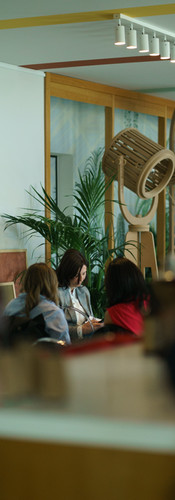
Some days start off in an unpredictable way, while others—like today—unfold in the best possible way. Today we were invited by Hub161 in Milan, at Corso Venezia 8, where we spent an afternoon exploring the relationship between design and architecture.

First and foremost, we would like to thank Raffaella Verri Zorzi, who successfully organized an event in a truly charming venue, creating the perfect setting for an open dialogue between different disciplines.
The event brought together not only the worlds of architecture and design, but also companies such as Artemide and Styl-Comp, along with creative figures like Gabriela Brunner, helping to foster a moment of genuine exchange and value. Hub161 thus confirms itself as a young, innovative, and conceptually advanced entity, capable of generating authentic connections between people, ideas, and projects. This is a context we find particularly meaningful and one we wish to continue following and supporting over time. For this reason, our first thanks must go to Hub161.


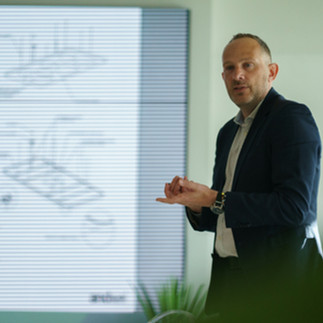
The first project we presented concerns the new Giuntini tailor shop for the Florence Group. We would like to thank Nicola Giuntini, Managing Director of the Woven Business Line at the Florence Group, and Attila Kiss, Chief Executive Officer at the Florence Group, who were with us in spirit, even if not physically. We described the construction of the new Giuntini tailoring workshop in Peccioli, Tuscany, a project in which the façade became a central and defining element.


The theme explored was that of architecture transforming into design, where form is not merely an aesthetic expression but becomes a language, a symbol, and a narrative device. Speakers at the event included architect Sergio Zambelli, CEO of Styl-comp S.p.A., who contributed to the creation of the façade;


his company is a true “concrete tailor shop,” and Eric Kroenberg, Sales Director at Artemide S.p.A., recounted the development of the Charlotte lamp.
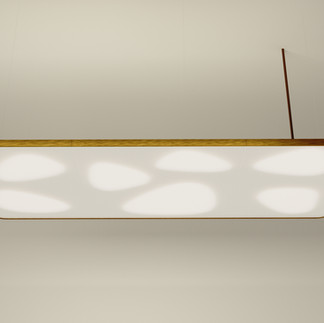
A project that made a rare transformation possible: turning an architectural icon into a design object. The holes in the facade, designed to filter light and create a vibrant, textural rhythm, become the light itself in the lamp. A lamp that is an extraordinary object—ultra-thin, only 7 cm tall but measuring 1.80 x 3.70 meters—designed to illuminate the desks in the studios of this new “tailor shop”; a lamp destined to become an iconic element of Italian design.




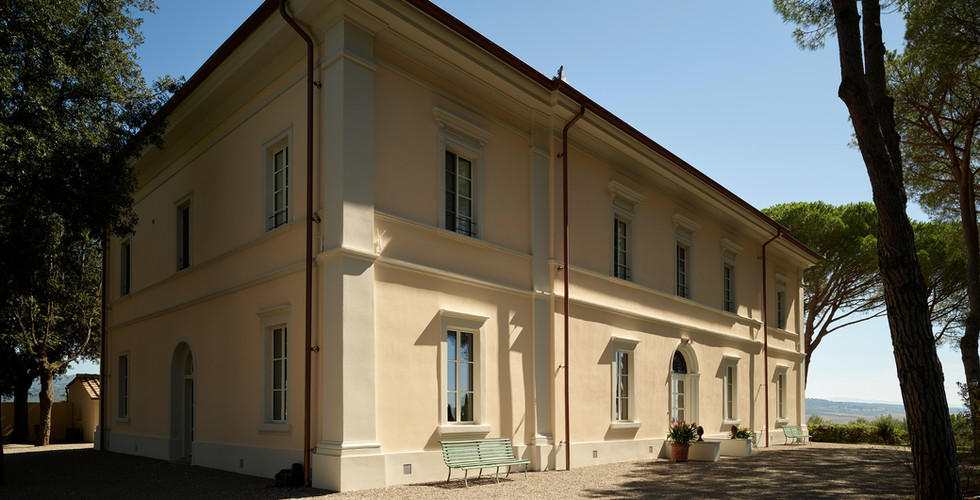
At our second meeting, we had the opportunity to share the stage with Gabriela Brunner, founder and director of Gabriela Brunner Studio, an artist and designer, and we explored the theme of architecture as a process of identity-building. Together, we discussed the restoration project of a 19th-century villa in Tuscany, Villa Valdiperga—a collaborative effort in which architecture and art were intertwined from the very earliest conceptual stages of the project.


The collaboration with Gabriela—who lives and works between Switzerland and Bermuda—is distinguished by a keen sensitivity to materials and a rare conceptual depth, capable of transforming the initial idea into a coherent and powerful narrative. This dialogue allowed the project to evolve beyond the scope of traditional restoration, giving shape to a true “artist’s villa.” This is not simply a space dedicated to art, but a concrete example of architectural restoration in which different languages find an authentic synthesis. A balance between memory and contemporaneity, where every choice—material, spatial, and luminous—contributes to building a precise and recognizable identity. This was the heart of the second meeting. Sincere thanks to Gabriela Brunner for her contribution, for the quality of her presentation, and for the harmony, in both gestures and words, with which she was able to describe her work during the Talk.







During the meeting, we also explored another project with a strong sense of identity, one that represents a significant direction for our firm. We are referring to the Podere La Chiesa winery, a project in which identity takes shape through a direct relationship with the Tuscan landscape. It is architecture that does not impose itself, but rather takes root in its context, becoming a spatial reference point and a measured presence within the territory. A project born from a deep dialogue with Maurizio Iannantuono, the client and at the same time the driving force behind the project, with whom we have established an authentic and shared relationship. His contribution has been fundamental: not only for the trust he has placed in us, but for his ability to actively participate in the process, helping to build together a coherent and sensitive vision.


In conclusion, this experience confirms that architecture is first and foremost a collective process, capable of fostering relationships, shared visions, and enduring identities, which draw their greatest strength from dialogue and cross-pollination.


