
Architecture that blends into the landscape
In the heart of the Pisan Hills, the design for the new farm outbuilding is based on a simple principle: to build as little as possible on the landscape, allowing the landscape itself to define the architecture. The new building is not a foreign element, but a natural evolution of the site’s historic agricultural layout, supporting the farm’s growth and the diversification of its production—from olive cultivation to vegetable farming and now beekeeping.

The most significant design decision was to integrate the structure almost entirely into the existing slope. The grass-covered roof restores continuity to the landscape, while access is provided from the valley side, taking advantage of the natural elevation difference without requiring major earthworks. In this way, the structure minimizes its visual impact and preserves the panoramic view of the surrounding hills.

The architectural language also engages with the rural traditions of Tuscany. The stone and brick masonry cladding echoes the retaining walls typical of the region, while the arched openings offer a contemporary reinterpretation of historical architectural elements, creating a building that is minimalist yet deeply rooted in its surroundings.
The project encompasses not only the new building but the entire landscape system. Existing vegetation is preserved and enhanced, the irrigation network is maintained, the rural road network is integrated with minimal intervention, and the new outdoor spaces reinforce the relationship between architecture, crops, and the landscape. The goal is to preserve the site’s agricultural identity while simultaneously improving its functionality and environmental quality.
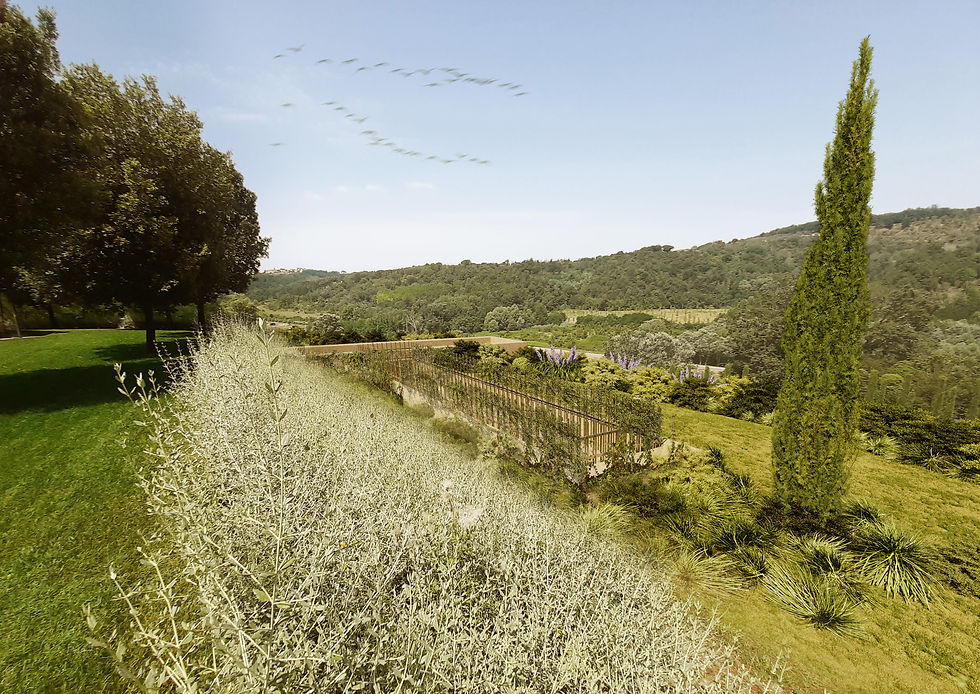
The result is architecture that does not seek to impose itself, but rather to become part of the landscape: a contemporary production facility that interprets the landscape as a design element and demonstrates how agricultural innovation, sustainability, and architectural quality can coexist within a single project.


